
From our very beginnings, smaller human communities have been replaced by larger communities. In the 21st century this process is in its final stage, the development of a single community for the planet. How can we manage this transition with a minimum of violence? Two very important things in any community are the governance structure and a common language.
Developing one larger community may begin with a formal association of smaller ones where each has a veto concerning policies of the new governing group, a confederation like the League of Nations or the United Nations in the 20th century. But sometimes no policy can be adopted to deal with some problems confronting that new group. A middle-of-the-road approach is needed. A democratic federation can be created as was done when Switzerland and the USA were formed.
Presently some regional federations are being formed in Europe, Africa, and Latin America, but a democratic global federation is needed for some current global problems such as climate change, modern war, and growing disparities in wealth. The basic idea of a federation is that problems should be solved by the smallest community that can do it. A democratic community needs a common oral and written language. In the past, the dominant language of the new larger community often has been imposed by force by one part of that larger community on the rest.
Which language should be adopted as a global second language in order to reconcile the lasting need for cooperative global action while preserving linguistic diversity?
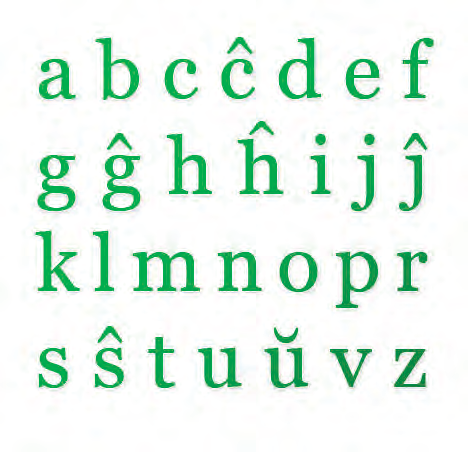
That dominant language then became the common language of the new larger community. But now we need to pursue a different path. The developing global community needs a common logical, neutral, non-national global second language that allows the national languages to continue being used where they are now used. It needs a language whose oral and written forms are totally congruous, a completely phonetic language such as Esperanto with its 28 letters each indicating one and only one sound.
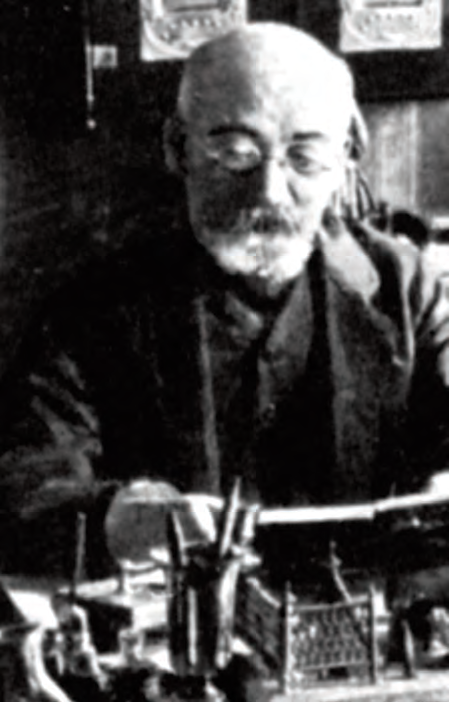
Which language should be adopted as a global second language in order to reconcile the lasting need for cooperative global action while preserving linguistic diversity? Esperanto, now used by an extensive community of “world citizens” or “mondcivitanoj,” is the way to get linguistic efficiency while preserving linguistic diversity and protecting national languages from dominance by any one national language. (In Esperanto that last letter J in “mondcivitanoj” is pronounced like the letter Y in English. Consequently, in Esperanto the word “yes” is written “jes” but pronounced the same as in English.) When Zamenhof developed Esperanto in the last part of the 19th century, he was motivated precisely by this aim of providing for linguistic unity while preserving linguistic diversity.