In late January 2023, a large white balloon began its journey across Alaska, into Canada, and across theUnited States. Appearing like the world’s largest golf ball, this ghostly sphere drifted at high-altitude until it was noticed by the US Government. The US eventually shot down the balloon when it had cleared civilian areas before collecting the debris for analysis.
Immediately the US identified it as a Chinese balloon, and the Chinese government concurred; the former, however, claimed it was for spying, the latter for weather data. The Chinese government offered that it was blown of course by wind or force majeure, but the US claimed it was deliberate. This was because the balloon had manoeuvrability technology and thus the US suspected that the flight path was not an accident at all. They also noted that it was equipped with solar panels which could generate large amounts of electricity. In April 2023, a leaked dossier also suggested that it had the ability to use radar which could ‘see at night or through clouds and thin material.’ It was then affectionately named Killeen-23 after the mobster of the same name.
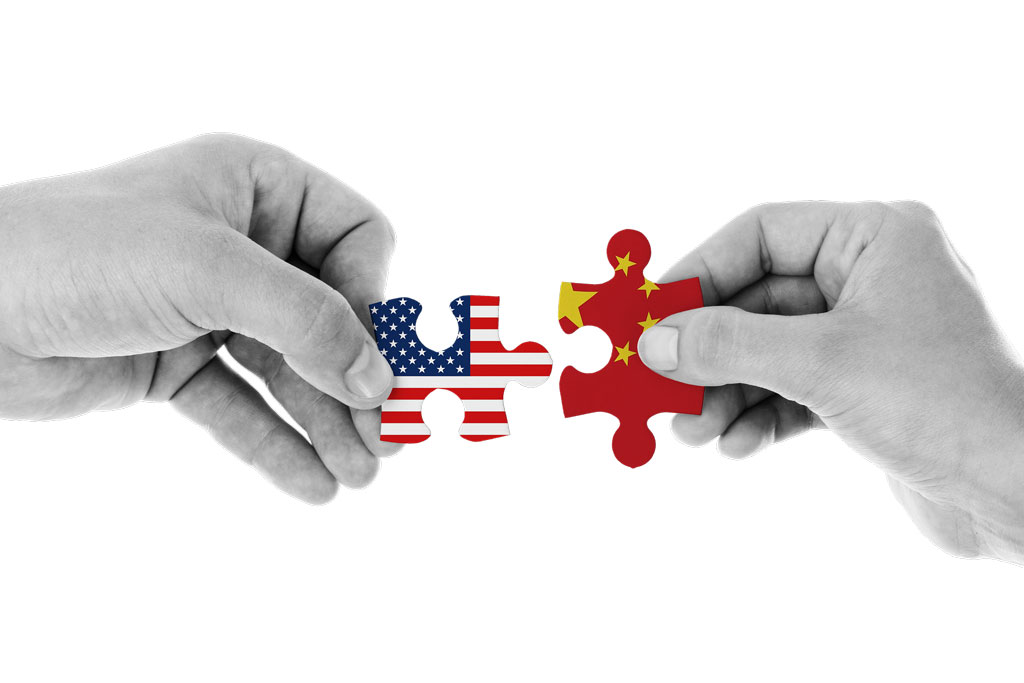
US-China relations are already at a low asthey are ‘locked in a steady, escalating, geopolitical competition’. The shooting down of Killeen-23 led China to accuse the US of an ‘obvious overreaction and a serious violation of international practice’. Aside from the normal security concerns that come from a state blowing another state’s technology out of the sky with a missile, this could have large repercussions for the issue of world federalism.
The first issue here is that to achieve world federalism, major powers need to play ball. The South China Morning Post interviewed a US-envoy who noted that ‘The US is now playing its version of the ‘Two Whatevers’ – whatever China does, they must oppose; whatever China advocates, they must disapprove of.’ This is far deeper than just policy disagreements, but the issue of power and propaganda. It’s also seemingly hard to deal with, as the truth becomes hidden behind a veil.
The search for the truth in politics is like wading through muddy water. Each country’s own interpretation of events mixes, making understanding what is actually going on nearly impossible. World federalism could change this, with a new level of transparency available by mandating clarity. The balloon incident is emblematic of the issue of transparency and security, particularly if the US is to be believed, but more importantly if China is. A federalist layer could have a large, independent watchdog with wide power to maintain an accurate, non-biased view of events.
US-China relations are also framed as economic ones; these countries are so economically entwined but politically apart. A federalist layer of government can regulate economic issues too, with a new layer of fairness added to international trade and even the prospect of doing away with tariffs and other trade formalities by having an EU-style system where goods are regulated in the same way across all countries, thus eliminating the bureaucratic issues.
It could also stop security events like this from even happening in the first place by levelling the playing field between countries by creating a supranational armed forces which could deal with security on behalf of the states and also prevent inter-state war by placing the military aspects of the states on one side. This large military would again be watched over and kept in line by an independent watchdog. The question is, though, how could we even implement this in the first place?
One view to implementing world federalism is through UN Reform. It could be achieved through altering the charters or reshaping it to allow for a vote by all as global citizens. With the US and China both being UN members, and both being permanent members of the UN’s security council, it may be that a resolution like this would not happen, even if both countries wanted it to. However, this pessimistic view should not cloud what could be if this was to occur. The US and China alongside Russia could cease their new cold wars and arrive at issues united. This union of states should stop this competition and security violations by incentivising tackling bigger ones like climate change, which threatens every state.
A federalist layer could achieve all this, leading to great advancement into the future towards technological progress and human development. It is not impossible. We are only limited by ourselves and the rules that govern us.