This is an exciting time for our organization. Over the past year we’ve launched:
- Three programs for adults and students (an online National Book Club, college-based World Citizen Clubs, and high school/college-based Model UNs),
- Three speaker’s bureaus (reaching out to college Peace & Justice Studies Programs, religious and spiritual communities, and the general public), and
- Multiple ways to spread our message online and in print (through improvements in our website, a monthly newsletter, a biannual journal, and through social media).
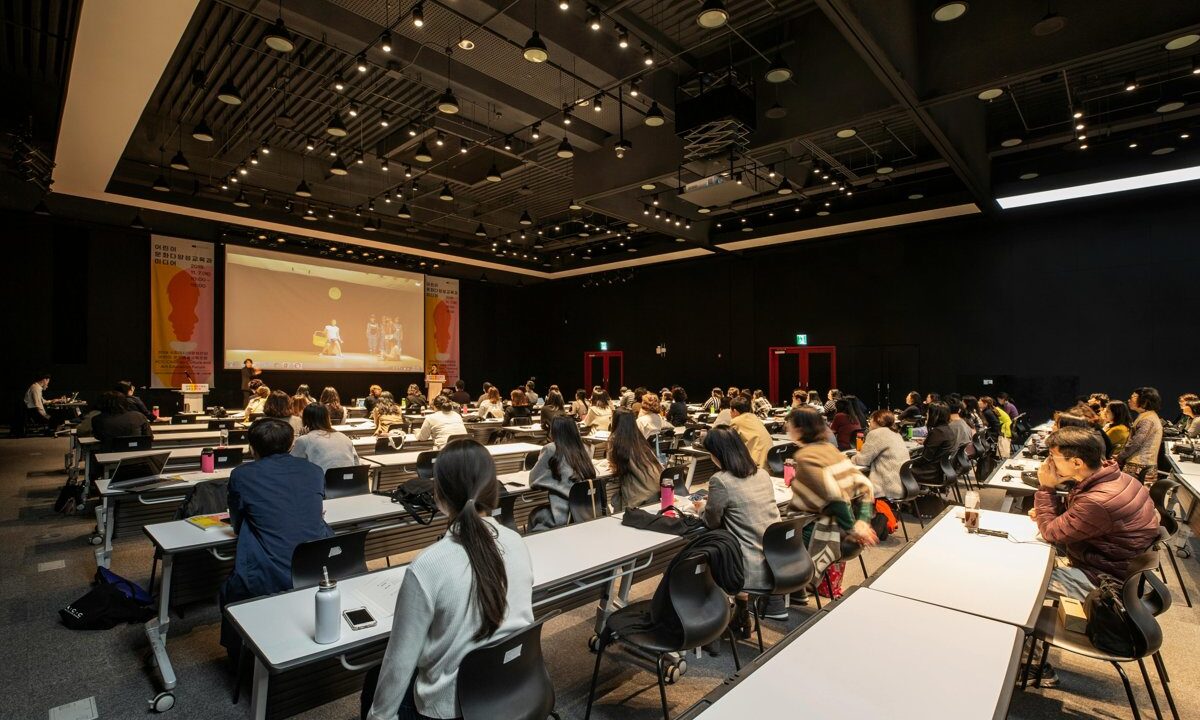
However, at our recent Annual Meeting, held November 1-3 at the Aris and Carolyn Anagnos Peace Center in Los Angeles, we boldly went where CGS has not gone before…
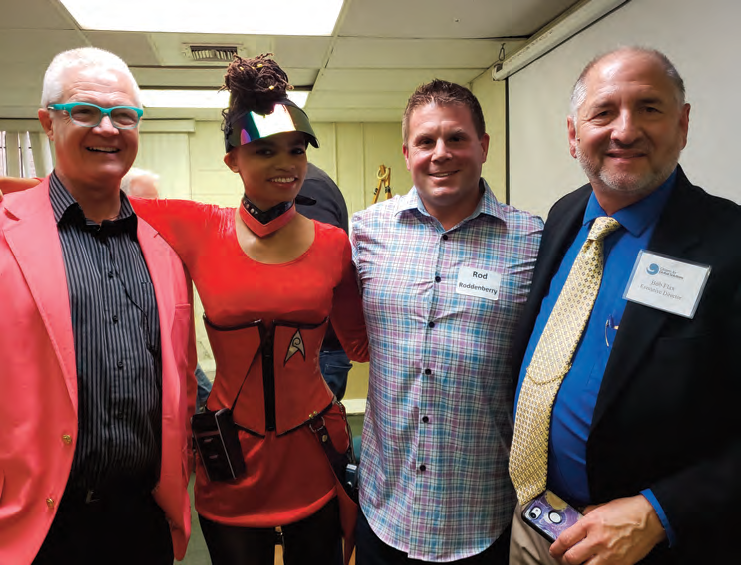
Our special guest was Rod Roddenberry, son of the legendary Gene Rodenberry, creator of Star Trek. Not only has Rod followed in his father’s footsteps by creating inspiring science fiction productions, but also has established a foundation which funds innovative solutions to critical global issues in science and technology, the environment, education and humanitarian concerns. Rod was joined on stage by Tad Daley, attorney and Director of Policy Analysis at Citizens for Global Solutions. A published author, Tad has worked as a political speechwriter, grassroots advocate, visiting scholar, and member of the International Policy Department at the RAND Corporation. As a longtime science fiction aficionado, Tad has appeared on panels at about two dozen science fiction conventions worldwide.
He explained his father didn't have the Enterprise exploring the galaxy to find strange looking creatures, but to find new ideas.
The event was “Star Trek and Human Destiny: From a Federation of Planets to a Federation of Nations,” a two-hour conversation between Rod, Tad, and the audience, exploring the philosophy behind Star Trek and the parallels between the interplanetary federation portrayed in the popular TV series and films and the possibility of a world federation here on earth.
Rod spoke about growing up in a Star Trek household: his mother played several roles, most notably Nurse Chapel in the original series; and his father’s philosophy of “IDIC” — Infinite Diversity in Infinite Combinations. He explained his father didn’t have the Enterprise exploring the galaxy to find strange looking creatures, but to find new ideas. He wanted to show that we would “grow by being exposed to a diversity of perspectives.” The strength of that diversity was regularly demonstrated by the crew, with Pavel Chekov, a Russian, and Hikaru Kato Sulu, a Japanese man, appearing on TV sets across America while we were in the midst of a cold war with the Soviet Union and not long after fighting a bitter war with the Japanese. Perhaps the most moving cast story involved Lt. Nyota Uhura, played by Nichelle Nichols. After the show’s first season, Nichols planned to quit and go back to musical theater. She was approached by Dr. Martin Luther King Jr., who convinced her to stay, because “for the first time on television, we [people of African descent] will be seen as we should be seen every day, as intelligent, quality, beautiful people who can sing and dance, yes, but who can go into space, who can be lawyers and teachers, who can be professors — who are in this day, yet you don’t see it on television until now.” With that, Nichols decided to stay.
Of course, the conversation did turn to the subject of global government. Not knowing what to expect, I was quite surprised to hear how fully Rod embraced the idea, calling it “ridiculous” that we don’t all live together in this way. Judging from the audience applause and the discussion that followed, many were of the same opinion.
Although the details of the United Federation of Planets were never fully fleshed out in the TV and movie series, it did have many elements that have been proposed for a system of global government, including an executive branch, a Supreme Court, delegates from its members, and a constitution. Many science fiction writers, from H.G. Wells to Isaac Asimov to Becky Chambers, have also told stories with a global government in the backdrop. As so much else in science fiction has come to pass, we hope that a world federation will become a reality, bringing peace and prosperity to the planet.
Due to the strong showing of interest in our work, we are starting a Los Angeles Chapter of CGS, to be led by long-time activists Tom Camarella and Tom Hastings. Contact them at [email protected] for meeting dates and further information.