We are living in a time when global economics have become central to international relationships. National economies are increasingly differentiated and interrelated. International economic relationships have become domestically politicized and, in some cases, weaponized as well. Unconventional wars are currently being waged by the U.S. against Iran, North Korea, and Venezuela using weapons of tariffs, sanctions, and secondary boycotts.
Income disparities in the U.S. are attributed to liberal economic policies enshrined in multilateral organizations such as the World Trade Organization. In his book “Straight Talk on Trade” (Princeton University Press, 2018), Harvard-based international economist Dani Rodrick addresses the crisis of legitimacy that many multilateral organizations, proposed or already existing, are experiencing. Rodrick challenges fellow economists to address the political and social underpinnings of economic policy in addition to the numerical aspects to which many economists confine themselves. This challenge is a direct and pointed challenge to the Chicago school of economists that over the past 60 years has posited the autonomy of markets, inspired deregulation, and advocated reductions in government regulation in general.
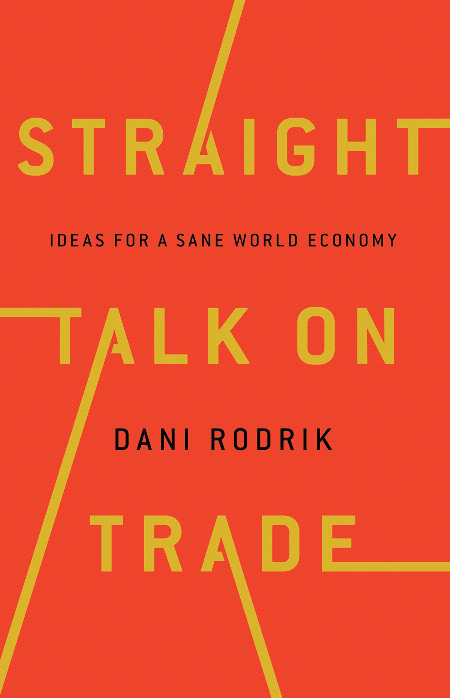
Rodrick argues that government is necessary to establish and stabilize markets. To enable lawful economic activity to take place, as well as to legitimize the results of economic activity, government is necessary. To accommodate current political realities, Rodrick proposes a flexible scheme of economic organization that incorporates national regulation of economic affairs with international coordination and harmonization. Roderick states that “The quest for extensive global governance is a fool’s errand, both because national governments are unlikely to cede significant control to transnational institutions and because harmonizing rules would not benefit societies with diverse needs and preferences.” At the same time, Rodrik supports the notion that governance is necessary for international markets to be established and maintained.
Will “federation lite” be enough to maintain the stability necessary for predicable trade?
His review of the primacy of domestic economic regulation, current multilateral organizations and problems of overreach lead him to propose “a different model of global governance, one that would be democracy enhancing rather than globalization enhancing. They would open up space for democracies to improve their functioning at home, without prejudging what the policy outputs ought to be or whether the result is greater economic integration. Global governance could then usefully contribute to democracy, through global norms and procedural requirements designed to enhance the quality of domestic policy making — instead of rules aimed at increasing global trade and investment.” Rodrik’s model of federation in economic affairs can be called “federation lite.” International economic governance must leave policy space for national regulation of economic affairs. As Rodrik describes, even income distribution effects are primarily a result of national policies and are unjustifiably attributed to trade effects.
However, in the case of the global commons, “there is a very strong case for establishing strong and binding global rules in these policy domains, since it is in the interest of each country individually to uphold its share of the upkeep of the global commons. Failure to reach global agreement would condemn all to a collective disaster.” What Rodrik overlooks in his analysis are the rapidly growing political interactions, both positive and negative, between aligned factions in different countries around the world. Growing international interchange and interaction will engender the development of transnational political movements that can create or destroy international trade and markets as well as the global commons. Will “federation lite” be enough to maintain the stability necessary for predicable trade?
Domestic management of trade and development depend increasingly on stable and predictable international markets. To say that political processes that allocate entitlements and power are entirely domestic in origin or impact is no longer true. At the same time, the argument of Rodrik that global governance should fundamentally support (and protect) local and national governance processes is a useful reminder to federalists that good governance begins at home.