In an era marked by the rise of nationalist populists around the world, it is only fair to see the possibility of achieving world federal- ist objectives through a more pessimistic lens. Worldwide efforts by organizations like World Federalist Movement – Canada to establish a United Nations Parliamentary Assembly, for example, seems all but impossible because of the need for its establishment by consensus or a strong majority across the international community. Other efforts to strengthen global governance too, seem very unlikely in these times – as soon as we achieve any progress in one nation-state such as a commitment to a greener economy or improving adherence to human rights commitments domestically, another state winds the gears of hope back by dismantling the progress of its previous gov- ernments under the helm of a nationalist pop- ulist figure.
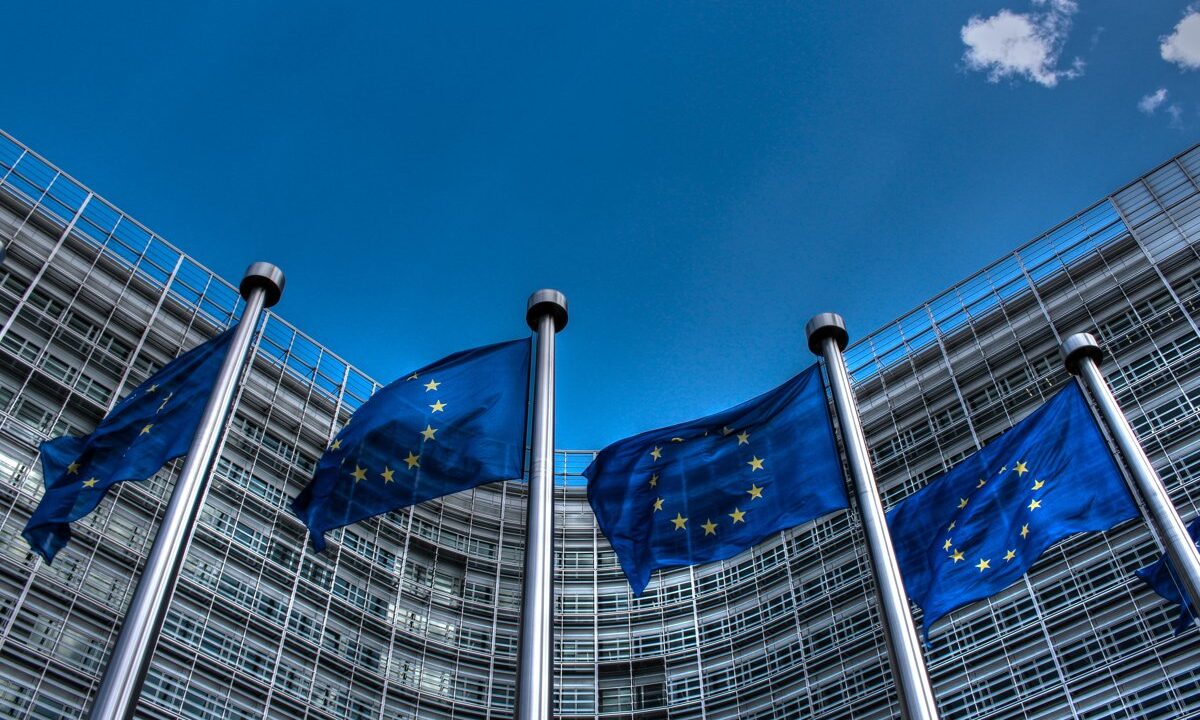
With early shadows emerging in the 1970s and a visible gain in momentum around the 1990s, we’ve seen nationalist populist movements attack international (and, particularly in Europe, supranational) institutions under the guise of taking back a democracy which had been subverted by a “global elite”. These pop- ulists view the sovereignty of the nation-state as sacred and absolute, rejecting the possibility that any other political unit can provide any representation or democratic channel for its citizens. This familiar characteristic we attrib- ute to populists takes many different shapes and forms, such as Donald Trump’s attacks on NAFTA in the United States or Viktor Orbán’s opposition to EU policy on refugees and asylum seekers in Hungary. The for- mation of the European Union has indeed been cited as a leading reason for the rise of populism in the continent. Although the Brexit movement took the spotlight in the last decade, the United Kingdom was not alone in its convictions to leave the EU. These move- ments spread across Europe with great force and very close calls, such as the efforts of the Danish People’s Party or the Swedish Demo- crats. In this way, the creation and gradual expansion of zones for the free movement of goods and services was also seen as the crea- tion of a “global elite”. They become a target for populists to point to as being responsible for the woes and turbulence of the national economy in times of crises.
Despite being on polar opposites of the scale in terms of the solution prescribed, both world federalist and nationalist populist move- ments also share the same criticism of current international and supranational institutions: they aren’t democratic (or efficient) enough! Various elements of the administration of EU policy on the economy and immigration is indeed distanced from the average citizen of the EU because of the membership of the European Commission being determined by appointment. This appointed body is respon- sible for submitting the budget proposals, lim- iting the power of the directly elected Europe- an Parliament to merely approve or disap- prove them. While the democratic mecha- nisms embedded in the EU are far more ad- vanced than those leading to the formation of international policy at the UN, they still have their notable weaknesses in terms of giving European citizens a voice. The body of the UN General Assembly is also determined by appointment rather than direct election, with very low standards for recognizing the repre- sentative legitimacy of appointed UN ambas- sadors. Since the appointment comes from the national political unit, some members of the body may have a more direct democratic link than others – clearly, any North Korean am- bassador’s voice at the UN is far less legiti- mate than the voice of any Canadian ambassa- dor. But even then, Canadian representation at the UN suffers from the chain of appoint- ments between various political actors domes- tically, distorting the original interests of vot- ers on global governance topics by throwing in various bureaucratic and national interests along the way. This democratic legitimacy component is a severe blow to aspirations of a General Assembly capable of forming inter- national (or world) law that would be binding for nation-states!
They become a target for populists to point to as being responsible for the woes and turbulence of the national economy in times of crises.

Ideally, we would have some sort of UN Par- liamentary Assembly to replace the General Assembly. This would involve creating a direct link between world citizens’ voices and global interests without going through, but in areas that don’t conflict with the global public good still respecting the sovereignty of, the national political unit. In other words, it would in many ways be a universalized version of the EU. World federalists have long advocated for such an endeavour, with minor differences in terms of how the voting groups would be ar- ranged and what types of policy would fall under the global political unit. Most proposals, however, tend to draw voting groups beyond nation-states, grouping different regions and taking population considerations into account. For Canada, we would most likely either be grouped with the US (and maybe Mexico) as a North American voting group, or cut in half so that groupings of Eastern US states and Canadian provinces/territories and groupings of Western states and provinces/territories would each form separate electoral districts.
The problem is that establishing such a system would require near-unanimous consensus across the international community. So how can we optimistically assert that strengthening global governance is possible as world federal- ists when populism is on the rise around us (not to mention the possibility of a second Trump administration looms on the horizon of 2024)? For one, each movement fuels the other, so any rise in nationalist populism pro- vides world federalists with argumentative ammunition and proof of the fallacies of absolute national sovereignty. And yet neither will disappear because of the other’s rise, no matter how disproportionate the ratio gets. Moreover, note that populists tend to fail in achieving their objectives in the long-run, lay- ing the groundwork for world federalist pre- scriptions for the same ills identified with in- ternational institutions in other areas (and over the long-run, in the same state that elect- ed the populist figure).
The most important point of this article, however, is that we must acknowledge that world federalist proposals follow a similar logic at their basis as those emerging from na- tionalist populist movements. It is critical for us, as world federalists, to be able to realisti- cally engage with supporters of nationalist populist figures and bring them to understand how we share similar concerns. Only then can we make progress as world federalists without fueling nationalist populist sentiments among the general public, and ultimately tip the bal- ance in our favour! Next time you engage with a “Trump supporter” or any right-wing popu- list movement supporter on the topic of for- eign affairs, just think to yourself: we have the same concern in mind, and while they may hold different notions in certain areas of po- litical theory, they will better understand that neither of us accept that the international sys- tem is sufficiently either efficient or democrat- ic as it stands, and that we have to do some- thing about it together!