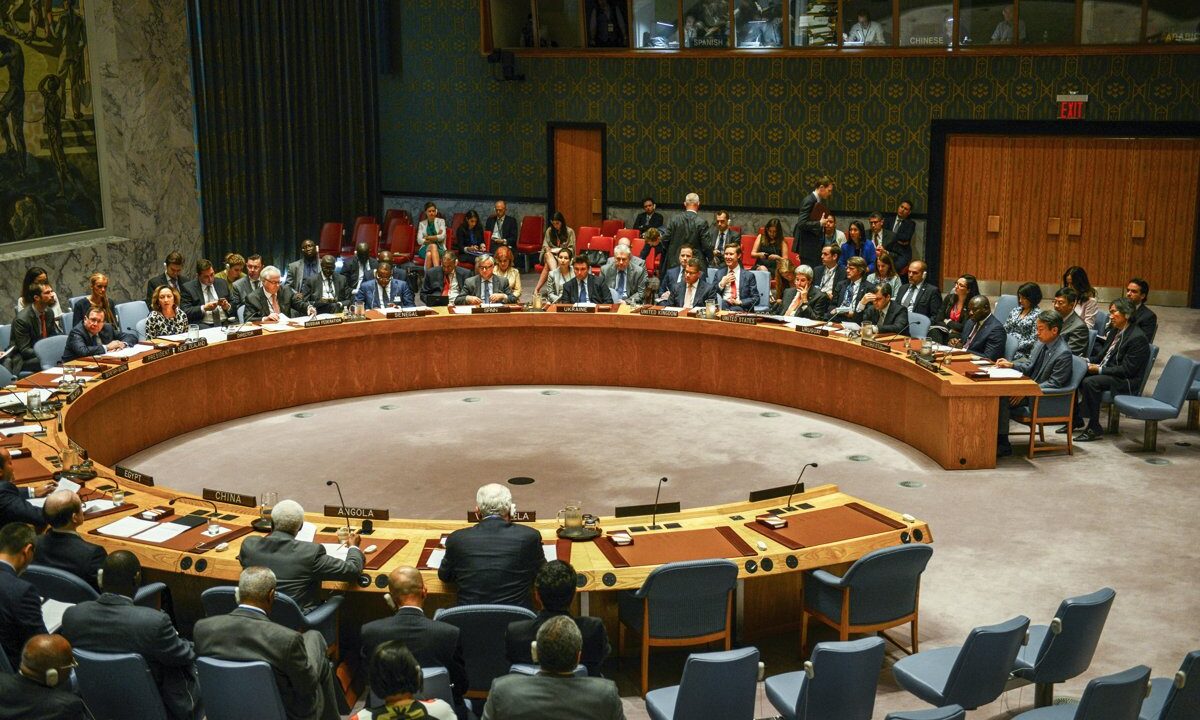
The Annual Secretary-General’s report on the Responsibility to Protect, entitled “Lessons Learned for Prevention,” set the stage for the International Coalition for the Responsibility to Protect’s (ICRtoP) advocacy and programming work over the recent months. Taking note of Member States’ interventions during the UN General Assembly’s Debate on the Responsibility to Protect (RtoP, R2P), the International Coalition for the Responsibility to Protect (ICRtoP) closely monitored the debate, where UN Security Council veto restraint initiatives, combating hate speech, and addressing root causes of atrocities through implementing the 2030 Agenda were highlighted as key prevention activities. On October 31, the ICRtoP hosted a side event to the UN Security Council Open Debate on Women, Peace and Security along with the Permanent Mission of Germany to the UN, Cordaid, Friedrich-Ebert-Stiftung New York, the Global Partnership for the Prevention of Armed Conflict (GPPAC) and WO=MEN Dutch Gender Platform. Entitled “Ensuring the Inclusion of Young Women in Conflict and Atrocity Prevention,” the panel event recognized the crucial role of young women as prevention actors in their local communities, underscoring the need to improve young women’s access to prevention spaces and engaging with them, rather than acting on their behalf.
The panel was opened by ICRtoP’s Program Associate, Marijke Kremin, and included women civil society leaders and activists from Afghanistan, Jordan, and the Philippines, who discussed the experiences and struggles of young women in the prevention field in their home contexts, as well as representatives of Germany and the UN Department of Political and Peacebuilding Affairs (UN-DPPA). Also, in the context of the annual UN Security Council Open Debate on Women, Peace, and Security, there was panel discussion on “The Relevance of Resolution 1325 to the Implementation of Peace in Colombia.” The discussion explored how UN Security Counci Resolution 1325 and subsequent women, peace and security resolutions were used by women in Colombia to, for example, demand participation in peace negotiations and ensure a gender perspective in the subsequent peace agreement. It also considered other examples of women’s involvement in peace processes and in the implementation UNSCR 1325 through National Action Plans. In December, the ICRtoP Secretariat staff returned to Beirut, Lebanon to facilitate an in-depth training on early warning and early action.
Alongside its implementing partner and Steering Committee member, the Permanent Peace Movement (PPM), the training sought to discuss early warning signs of atrocities and early actions members of civil society can take to prevent their occurrence, and how mainstreaming the RtoP can strengthen the work participants are already undertaking. The Responsibility to Protect (R2P) is an international security norm. It specifically provides a framework intended to prevent genocide, crimes against humanity, war crimes and ethnic cleansing. R2P does not address other serious human security problems such as natural or environmental disasters, climate change or nuclear proliferation.
The focus of R2P is deliberately narrow, but with a range of tools for dealing with these particular violations.
The focus of R2P is deliberately narrow, but with a range of tools for dealing with these particular violations.