The 2025 Freedom House Report reads: “Freedom declined around the world for the 19th consecutive year in 2024. People experienced deterioration in their political rights and civil liberties in 60 countries, and secured improvements in only 34 countries. … Violence emerged as a major theme during the year of global elections, affecting 27 of the 66 countries and territories where national voting took place in 2024.”
Woodrow Wilson in 1918 and Franklin D. Roosevelt in 1944 designed international institutions to ensure that the world was a safe place for democracy. In the twenty-first century, it is necessary to acknowledge that these institutions are no longer able to defend the values and rights of the citizens who inhabit the planet. A war is underway in Ukraine in which Russia threatens the use of nuclear weapons; in the Middle East, Israel claims to guarantee its own security by subjugating the other peoples of the region with weapons and massacres. In the United States, President Trump claims to govern his country and the world by imposing his will with economic (tariffs) and military threats. The United Nations, which is supposed to guarantee peace between nations, is paralyzed by the great powers, primarily by the United States and Russia. This climate of insecurity infects the civilian life of nations, even those that, for the moment, are not yet involved in armed conflicts. In universities, some academics have begun to investigate the world phenomenon, calling it “backsliding”, the slide of democracy towards autocracy.
This type of investigation is useful, but it ignores the cause of the interdependence between national and international politics. To clarify this relationship, I recall an investigation on democracy and its history by John Keane which illustrates very well what happened in the years between the two world wars, when Mussolini’s fascist party seized power in Italy and when Hitler followed his example to conquer the position of Chancellor of the Reich in Germany. Keane titles the chapter dedicated to these events: “The European Graveyard” of democracy. Germany was suffocated by the enormous reparations imposed by France, at Versailles. When the economic crisis of 1929 broke out, unemployment, inflation and protests by German citizens grew in intensity. Elections were organized at close range. Finally, when the National Socialist German Workers’ Party came out in the majority, Hitler told the defeated Chancellor Bruning: “it is the fundamental thesis of democracy that all power derives from the People” (Keane 2009: 569). Democracy had been defeated in Italy by Mussolini who had created the “Fasci di combattimento” (Fighting Fascists) by gathering war veterans willing to use force against other parties in electoral campaigns. Hitler successfully followed the Italian method for the conquest of power and for setting Germany on the path to domination of Europe and the world.
A century separates us from those dramatic events. After the Second World War, Europe and the world conquered levels of civilization and well-being unthinkable in the days of Mussolini and Hitler. However, the scourge of war has reappeared on the horizon of world politics in new forms. Nuclear war is a threat that could involve entire continents in a very short space of time, because the nuclear powers possess a quantity of weapons capable of destroying the planet several times. In addition, climate change is added to this first threat, a calamity that the 193 countries of the United Nations have committed to fight but which is advancing inexorably, because the promises of national governments made on solemn occasions, such as in Paris in 2015, are immediately forgotten: no one forces them to respect the commitments they have signed.
War is violence organized by nation states. Violence is the cancer that, in authoritarian states, is used or threatened by those who govern. When violence creeps into democratic states, the delicate counterweights of the rule of law falter. Wars and climate change are threats that loom over young people, they produce distrust in politics and parties that are unable to offer a horizon of peace and social progress. Security is a public good that nation states are no longer able to guarantee to their citizens. The threats are global, politics is national. Today “The Global Graveyard for Democracy” is approaching.
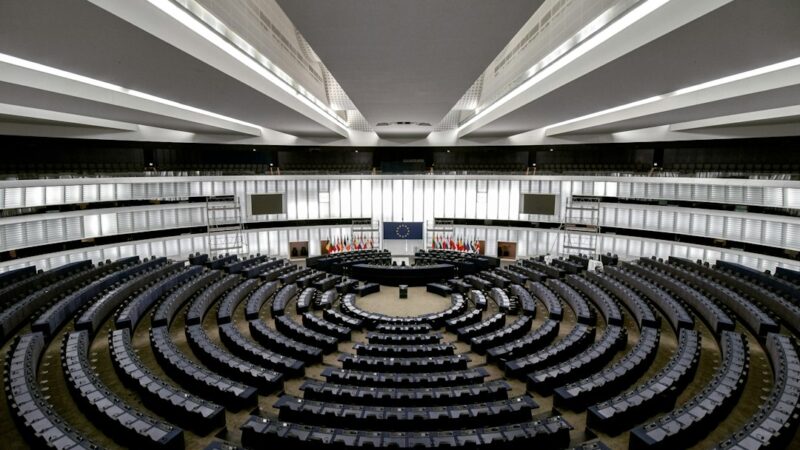
Federalists should turn their attention to the degradation of democracy in Europe, where the most significant process of overcoming national borders and national politics since the Second World War has developed. According to a study on the phenomenon called backsliding: “the failure of the European Union to respond effectively to the regional challenges of austerity, migration, and terrorism eroded the security regimes that democratic nation states had offered their citizens, creating antagoniusms between the local and the global that nourished the rise of the nationalist right…. Backsliding were enabled – not tamed – by the internationalization strategies of German and West European Christian Democratic parties” (Bunce, Pepinsky, Beatty Riedl, Roberts 2025: 5). The slide of German politics towards national-populist parties is evident in the interview given by Chancellor Friedrich Merz to the Frankfurter Allgemeine Zeitung (19/10/2025). To the question; “when in the past we thought big, the idea of a European federal state often came up. But don’t you want to come to this?” Merz replies: “I never believed in this idea. I was among those who removed the term ‘United States of Europe’ from the CSU program.” Merz’s position resulted in a vote in the European Parliament (13/11/2025) when the European People’s Party (which includes the CSU) voted together with the national-populist far right against the majority supporting the Commission in a debate on climate change.
These episodes indicate that the future of the European Union is threatened. The Schuman Declaration states: “The contribution which an organized and living Europe can bring to civilisation is indispensable to the maintenence of peaceful relations.” This statement was true in 1950 and is true today. Unfortunately, it must be noted that Adenauer’s party, which together with Schuman, de Gasperi and Spaak founded the ECSC, no longer believes in the ideals of peace that inspired the founders of a free and united Europe. If the European Union crumbles, as the Soviet Union crumbled, due to the “democratic” victory of the national-populist forces, it will open up an acceleration of the “backsliding” of democracy on a global scale.
This problem concerns all federalists, European and world federalists. We need to discuss the future of Europe and the world in order to unite democratic forces against a common danger. There will be no future for democracy and federalism if the forces of national-populism prevail in Europe and in the world.