June 2026
Addressing Displacement: An Inherent Problem of a Divided World
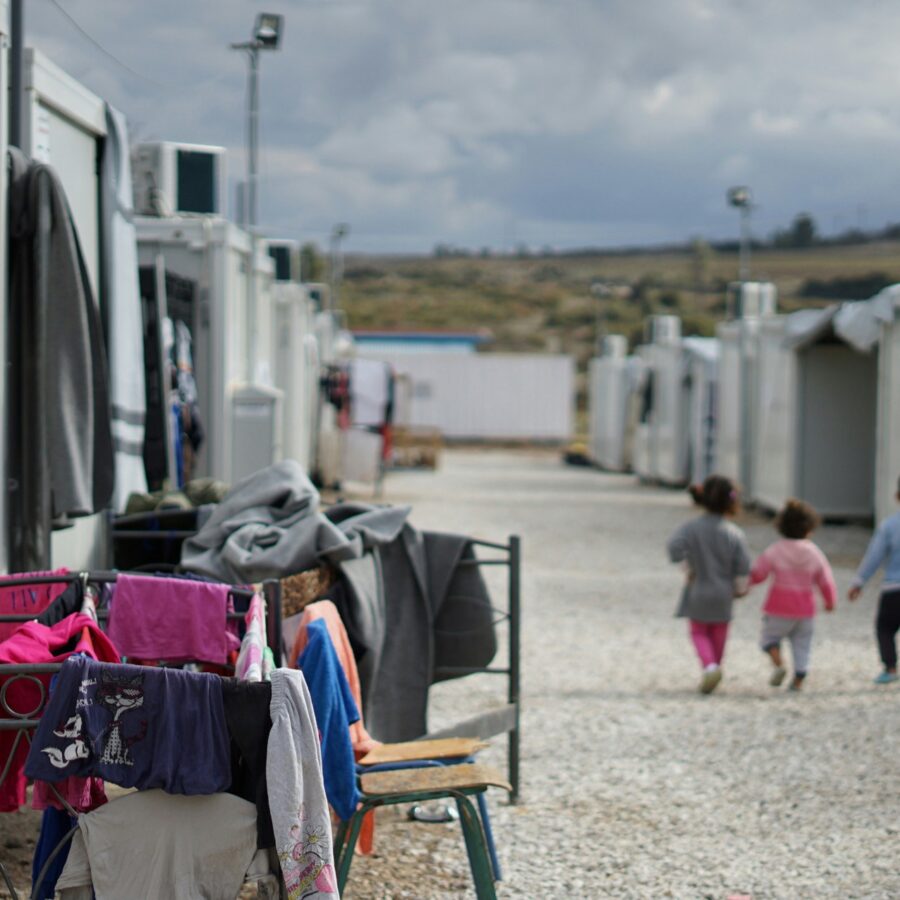
Over 120 million displaced people face human rights violations. A divided world system creates stateless individuals and refugee crises.
June 2026
Over 120 million displaced people face human rights violations. A divided world system creates stateless individuals and refugee crises.
June 2022
National populist movements view the nation-state's sovereignty as sacred and absolute, rejecting any other political unit's representation. Both world federalists and populists criticize current international institutions for being insufficiently democratic or efficient.
June 2022
The birth of the United World Federalists in 1947 marked a pivotal moment in global peace efforts. The organization, now Citizens for Global Solutions, has since worked on major campaigns, including the nuclear non-proliferation treaty and the establishment of the International Criminal Court.
June 2022
Mondial interviews Amy Oloo, incoming Executive Director of WFM-IGP, on her priorities for the organization, which include rebuilding programs and finances after a period of institutional transition, centering youth and Global South voices, and pursuing pragmatic partnerships with other global governance NGOs. Oloo identifies UN Security Council reform as overdue but structurally difficult, and favors both improving existing institutions and building new, more inclusive ones.
September 2021
This article examines how various religious groups and leaders advocate for a democratic world federation to solve global crises like genocide and climate change. These groups propose a world constitution and global laws to replace the current system of warfare and unenforceable treaties.
March 2023
The article argues that the world has become an interconnected organism susceptible to systemic risks, necessitating a collective response. It proposes that the only viable long-term solution is the establishment of a world federation with supranational institutions and binding legislation.
March 2023
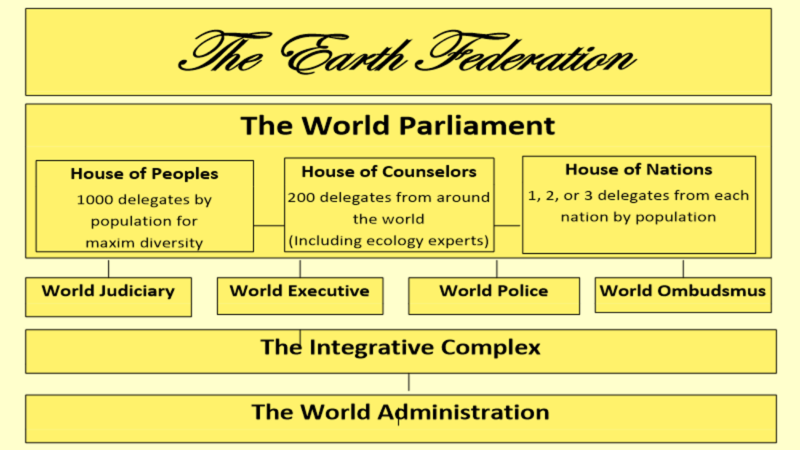
This article outlines a proposed 'Earth Constitution' that grounds global governance in shared human dignity rather than national sovereignty. It details a World Parliament structure with three houses (Peoples, Counselors, and Nations) designed to embody the principle of unity in diversity.
March 2023
The article argues that great powers have historically used military might to launch assaults upon smaller societies, a pattern that continues today. It traces the historical push for global peace, from early federalist thinkers to the establishment and limitations of the United Nations.
September 2021
This article tracks the recent rise of nationalist populist movements globally, noting how leaders like Trump and Bolsonaro gained power by appealing to public discontent. However, the piece concludes by detailing the subsequent wave of defeats for these nationalist forces across Europe and the United States.
September 2021
The article discusses the concept of a "United Federation of Nations," arguing that the global community should transform the current United Nations into a democratic federal world government. It draws parallels between this proposed transformation and the historical shift from the Articles of Confederation to the U.S. Constitution.
September 2021
This article traces the ancient and persistent idea of a single political entity governing all of humanity, citing examples from Socrates to Dante. It examines how this concept evolved through various historical periods, culminating in modern discussions about global peace and governance.
March 2023
This article examines the Clark-Sohn plan, a historical proposal for world government designed to abolish war through constitutional amendments to the UN Charter. It contrasts this plan with other maximalist proposals, arguing that its focus on universal disarmament and world law makes it highly persuasive.
March 2023
The article argues that global threats like climate change, nuclear proliferation, and conflict require immediate global unity and conviction. It critiques the current failures of multilateral institutions, such as the UN Security Council and climate accords, and calls for strengthening the UN into a democratically elected world federation.