World Federalism
Voices in World Federalism

All articles in World Federalism
-
Who Governs Sovereignty?
Supranational Federalism · March 2026
From Caracas to Greenland, protection increasingly depends on alignment with powerful states, not on law, a pattern long familiar in Africa. Recalling the Lomé Convention’s joint parliamentary assembly, the article argues that Europe and Africa should rebuild cooperation on shared authority and rules.
-
The Agony of International Law
Supranational Federalism · March 2026
The world is drifting toward imperial blocs, nuclear proliferation and automated launch decisions, the editorial argues, and the legal order as now conceived cannot stop it. Peace needs a supranational government, a court with teeth and a reinforced blue-helmet force, as Einstein urged in 1947.
-
Our Global Identity Crisis
Young World Federalists · March 2026
Rivalries over sport, party and nationality feed a deep human need to belong, and the powerful exploit it to divide people. Labels acquired largely by luck, such as nationality, ethnicity or religion, breed racism and war.
-
‘Occupy Earth’ Launch Amid Global Turmoil
Young World Federalists · March 2026
Autocracy, war, climate breakdown and unchecked AI are symptoms of nation-states clinging to absolute sovereignty, and electoral democracy cannot fix them. A nonviolent mass movement can press leaders to cede limited sovereignty to a world federation.
-
Billions Must Love: A Pathway to World Federalism
Young World Federalists · February 2026
Before a federated world can come, citizens need political education, citizens’ assemblies and proportional voting at home. Subsidiarity would then limit a world government to climate, nuclear disarmament, pandemics and human rights, under a UN reformed for fair representation.
-
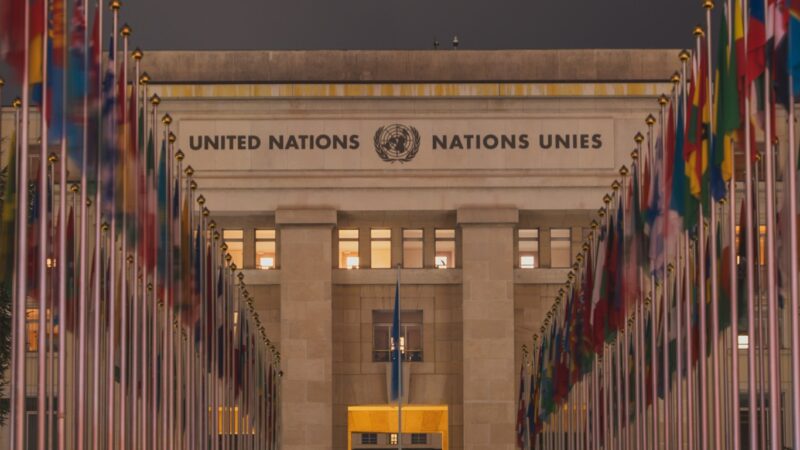
Eightieth Anniversary of the United Nations first meeting in Methodist Central Hall
World Federalist Movement · February 2026
At a Westminster service marking eighty years since the UN first met there, Cardinal Vincent Nichols called its founding a covenant against vengeance and prayed for the renewal of international institutions as nationalism rises and multilateralism falters.
-
A World Parliament Is Our Best Hope for Avoiding a Plunge Into Nuclear Anarchy
Citizens for Global Solutions · February 2026
The New START Treaty’s expiration threatens to reignite a global nuclear arms race. A world parliament is proposed as the key to preventing nuclear anarchy.
-
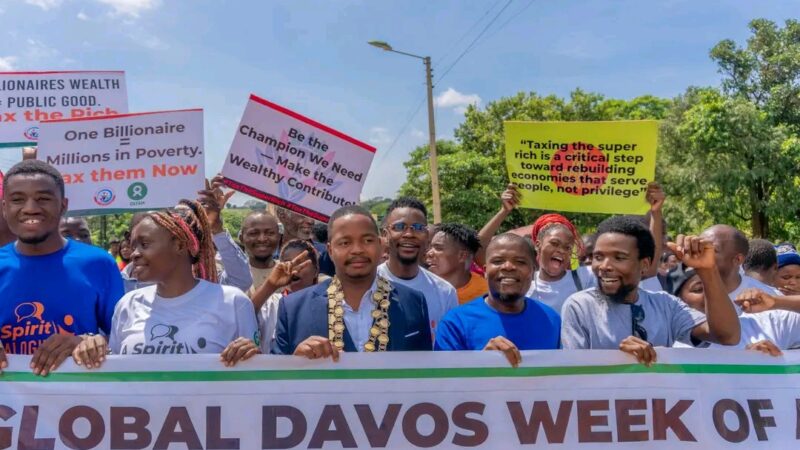
From Panzi to Lilongwe: The roots of a democratic world order
Young World Federalists · January 2026
Young World Federalists highlight grassroots climate action in the DRC. Local tree planting initiatives embody global stewardship and democratic governance.
-
It Could Be a Wonderful World
Citizens for Global Solutions · January 2026
While billionaires hoard wealth and leaders such as Trump, Putin, Kim Jong Un and Netanyahu flout international law, humanity has the knowledge and productivity to end poverty and improve health and education. An organised international effort could close the gap between what is possible and what is real.
-
War, Peace and Federalism
Supranational Federalism · December 2025
The campaign to widen the International Court of Justice’s role, the article argues, rests on good intentions no great power will accept. Taking up Einstein’s 1947 proposal, it urges federalists to campaign for disarmament and a supranational police force of UN blue helmets.
-
Garry Davis: World Citizen and World Activist
Supranational Federalism · December 2025
A decorated B-17 pilot renounced his US citizenship in 1948 after turning against the system that made him kill. The piece presents his life as the case for tying citizenship of the world to democratic world government, since neither works without the other.
-
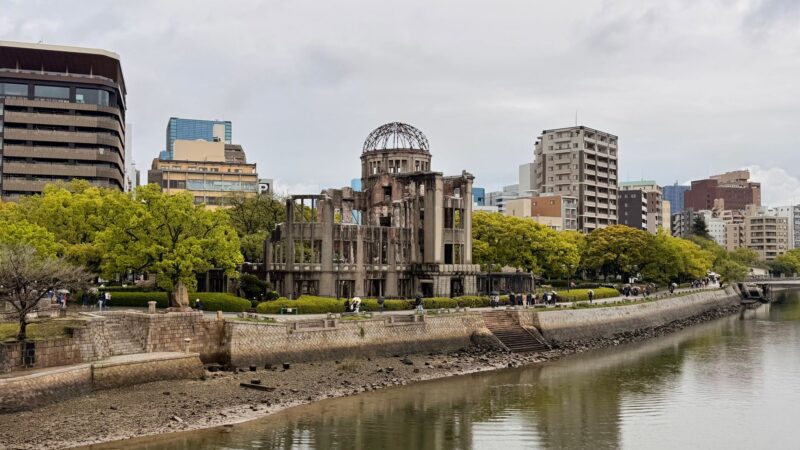
“A Tragic Illusion”: Did the Atom Bomb Make the United Nations Obsolete Three Weeks After its Birth?
Supranational Federalism · December 2025
Truman, Einstein and John Foster Dulles each acknowledged, in different ways, that the UN Charter fell short of the atomic age. The piece credits the UN’s achievements but argues that, eighty years on, it has still not abolished war.